From CAD to delivery, Oniro manufactures thermoplastic components for industrial applications using solid-polymer 3D printing and Foam Additive Manufacturing® (FAM). We combine engineering, manufacturing and finishing to deliver functional parts and support series production.
Oniro manufactures density-graded thermoplastic foam components for marine structures using Foam Additive Manufacturing® (FAM). We turn already certified thermoplastics into ultra-light foams while printing, enabling structural and buoyant zones in a single part — with fewer assembly steps and a clean supply chain.
Up to 80% weight reduction
FAM transforms standard thermoplastics into ultra-light foams during printing, reducing mass while keeping geometry and function integrated.
Compatible with certified marine polymers
Process ASA, r-PET, PA6, PETG and high-performance polymers such as PEEK and PEIwithout introducing chemical additive or new materials, avoiding extra certification and supply-chain changes.
Porosity gradient control (voxel-by-voxel)
Density and stiffness can be tuned voxel-by-voxel (0.2–0.9 g/cm³), enabling structural and buoyant zones in the same continuous print.
Monomaterial, graded, fully recyclable
No adhesives or mixed cores: a closed-loop monomaterial structure designed for recycling at end-of-life.
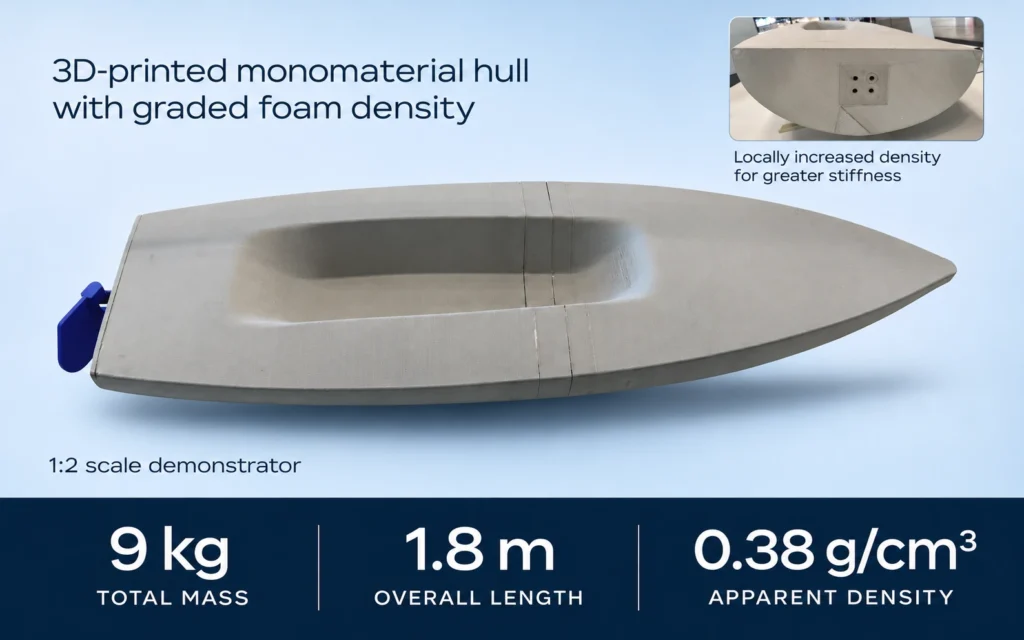
3D-printed monomaterial hull with graded foam density: 1.8 m, 9 kg, 0.38 g/cm³ apparent density. A denser stern provides local reinforcement. Scale 1:2.
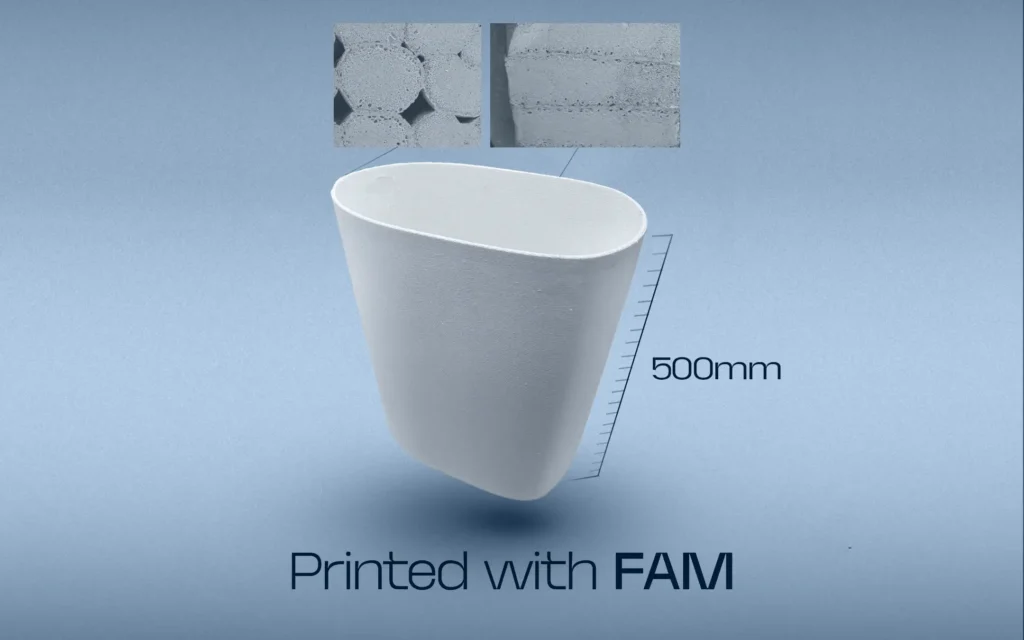
3D-printed thermoplastic foam component, 500 mm high. FAM combines custom geometry with a controlled cellular structure for lightweight marine applications.
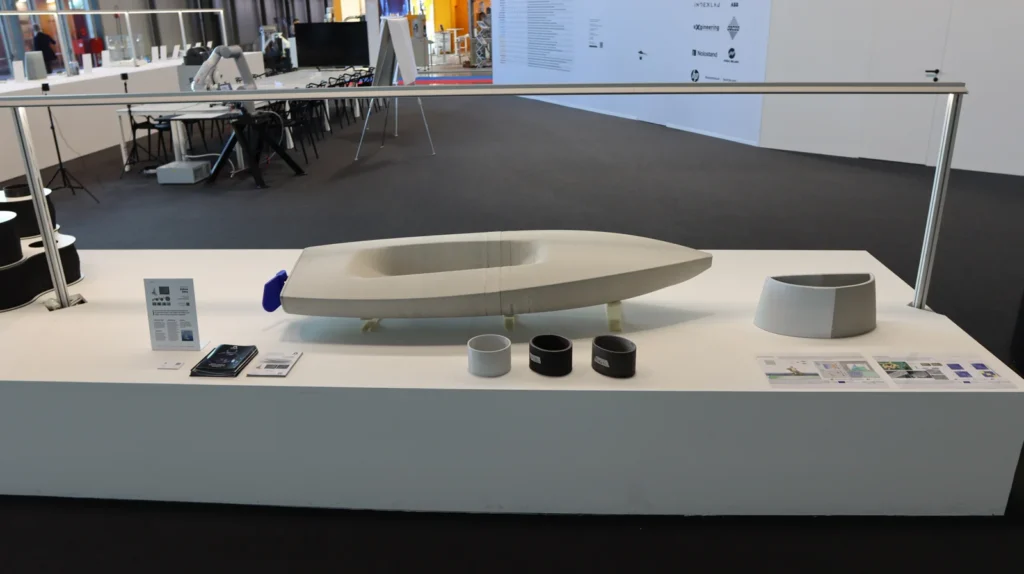
The 1.8 m, 9 kg FAM hull demonstrator presented alongside printed material samples at an exhibition.
Lightweight marine components
Oniro uses large-scale additive manufacturing of thermoplastic foams to create lightweight marine components. Foam Additive Manufacturing® (FAM) combines low-density regions with denser reinforcement zones within a single material.
Hull demonstrators and sandwich cores
Interior panels and bulkheads
Buoyancy modules and protective housings
Industrial tooling & components
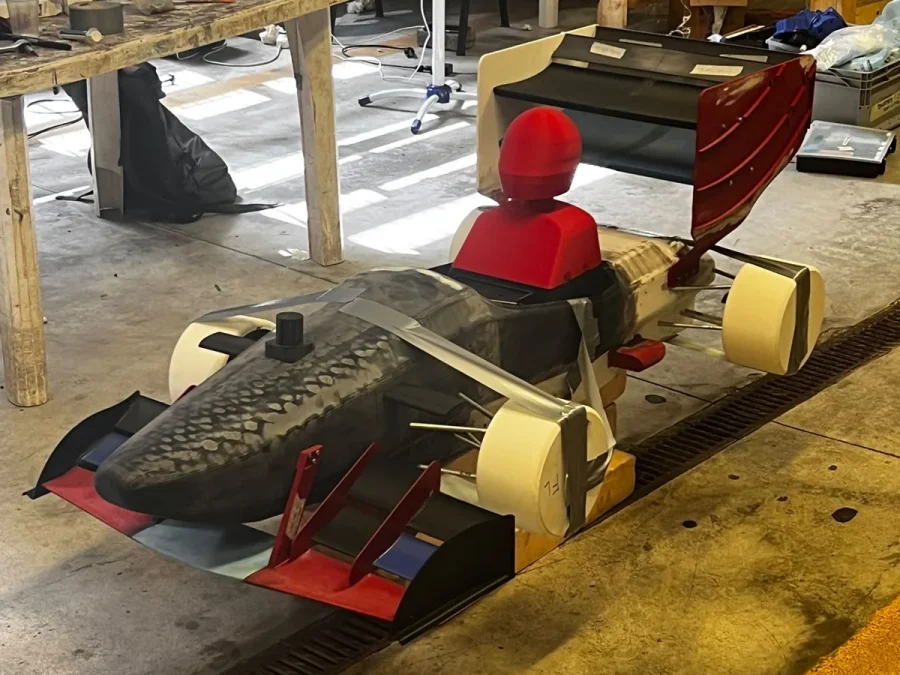
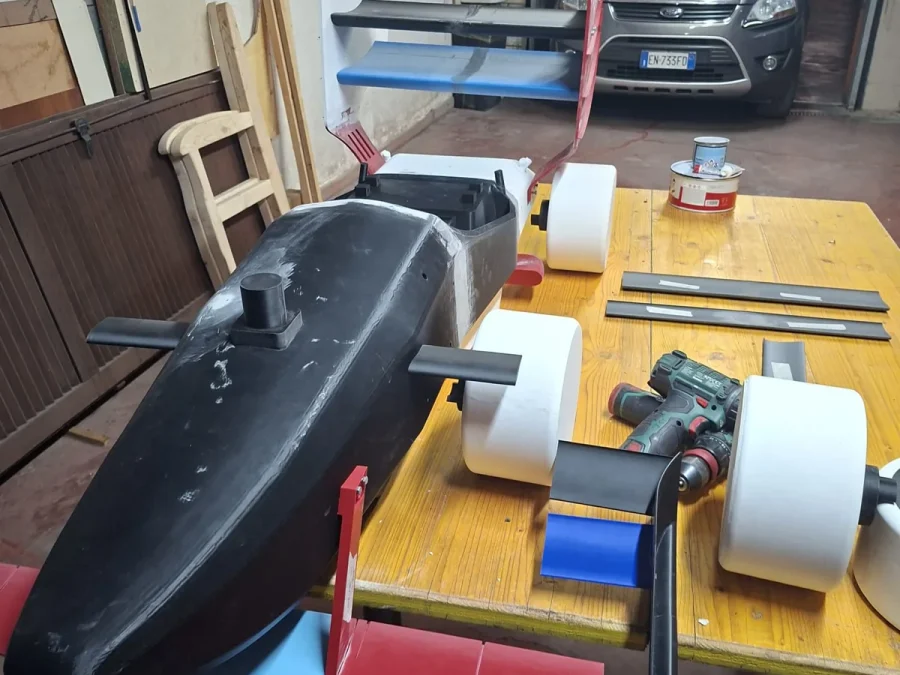
Oniro develops custom 3D-printed tooling, enclosures, supports and engineering models around equipment and testing requirements. From CAD geometry to printing, assembly and finishing, we consider interfaces, fixing points and access. Applications include battery-pack supports, machine enclosures and the nearly 1.8 m Formula model for wind-tunnel testing shown below.
Geometry for your assembly
Interfaces, fixing points, clearances and access guide the geometry of each component.
Material selection
Material selection starts with the intended use, operating environment and manufacturing requirements.
Printing and finishing
We define the printing approach and required finishing according to the component’s geometry and intended application.
Start with a technical review
Send a CAD file, drawing or functional requirement to discuss geometry, material, finish and project deliverables.
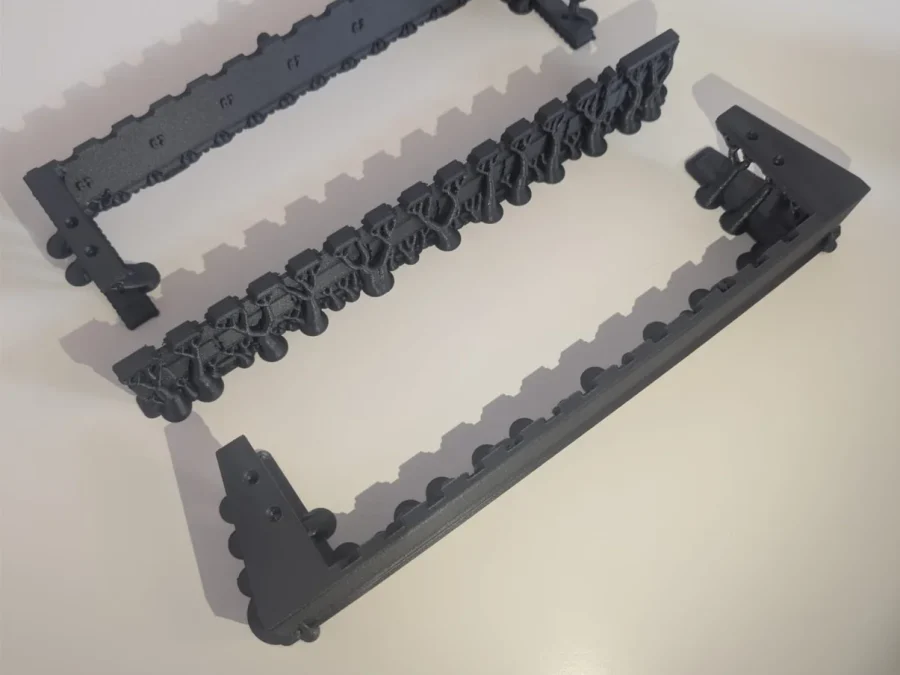
Printed battery-pack supports, showing repeated interfaces and fixing features.
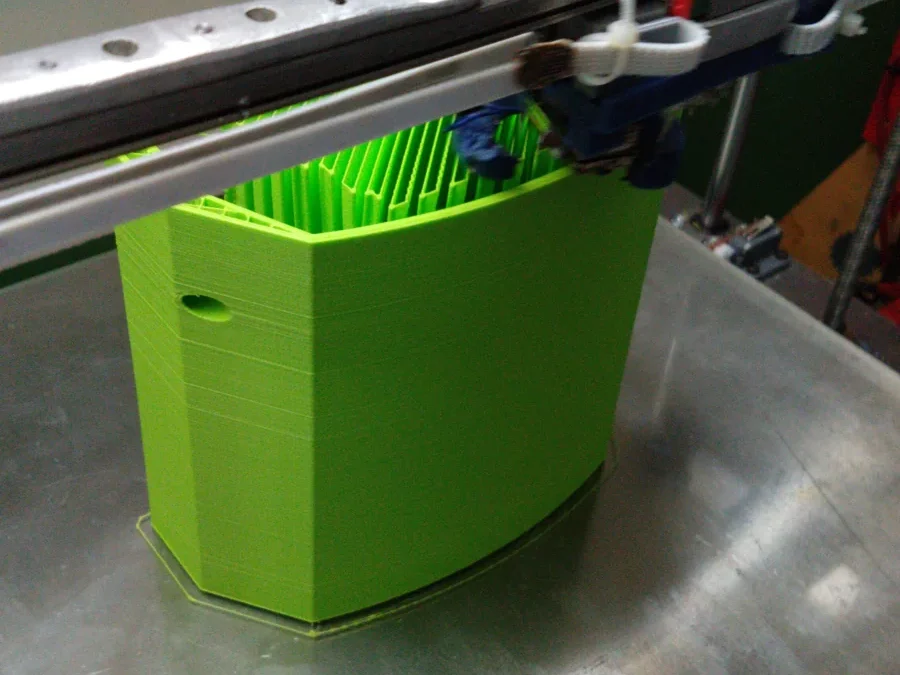
PETG machine enclosure during 3D printing. From the founder’s earlier portfolio at Officine Detry.
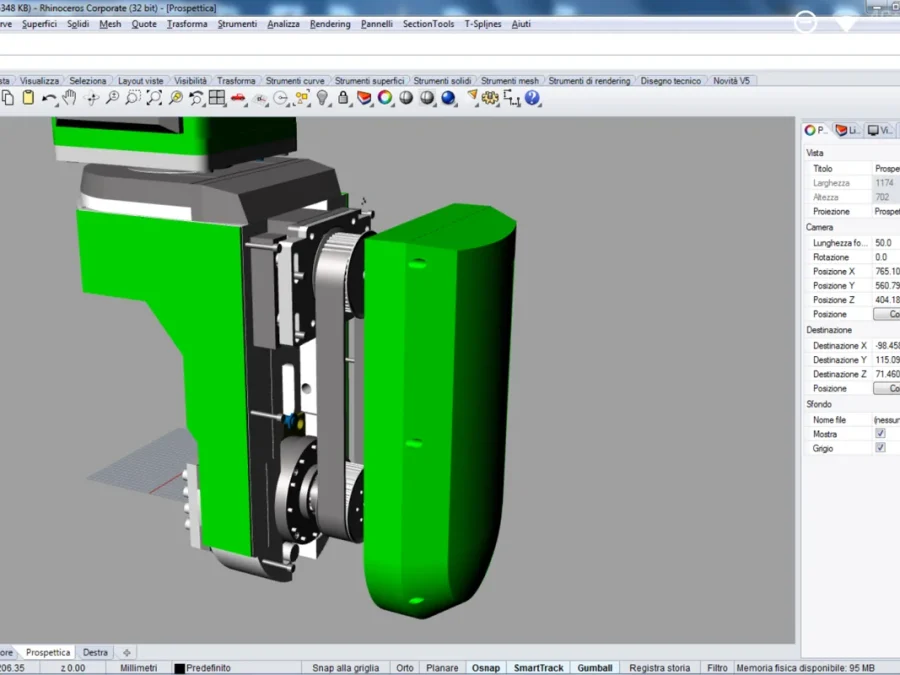
CAD integration of the enclosure around the CNC mechanism. From the founder’s earlier portfolio at Officine Detry.
Assembled Formula scale model for the Unina Corse project, nearly 1.8 m long and intended for wind-tunnel testing.
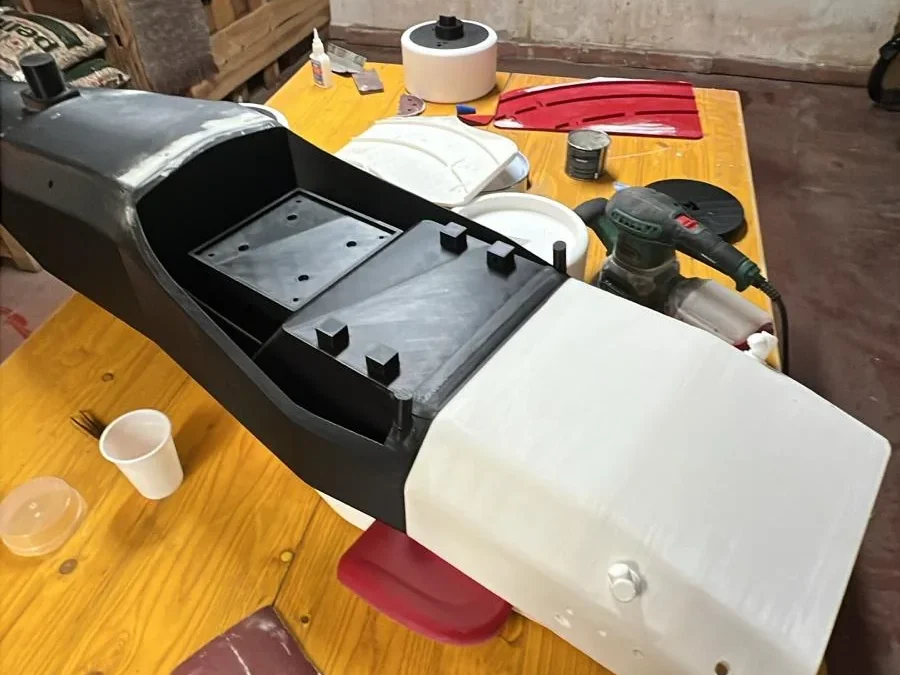
Assembly and surface finishing: the Formula model on the workbench, with separate components prepared for integration.
Body and cockpit sections during bonding and surface preparation, before final assembly.
Tooling, components and engineering models
From CAD geometry to printing, assembly and finishing, we develop custom components around interfaces, fixing points and the intended use.
Applications include battery-pack supports, machine enclosures and engineering models for engineering development. Browse the carousel for project photos and the description of each application.
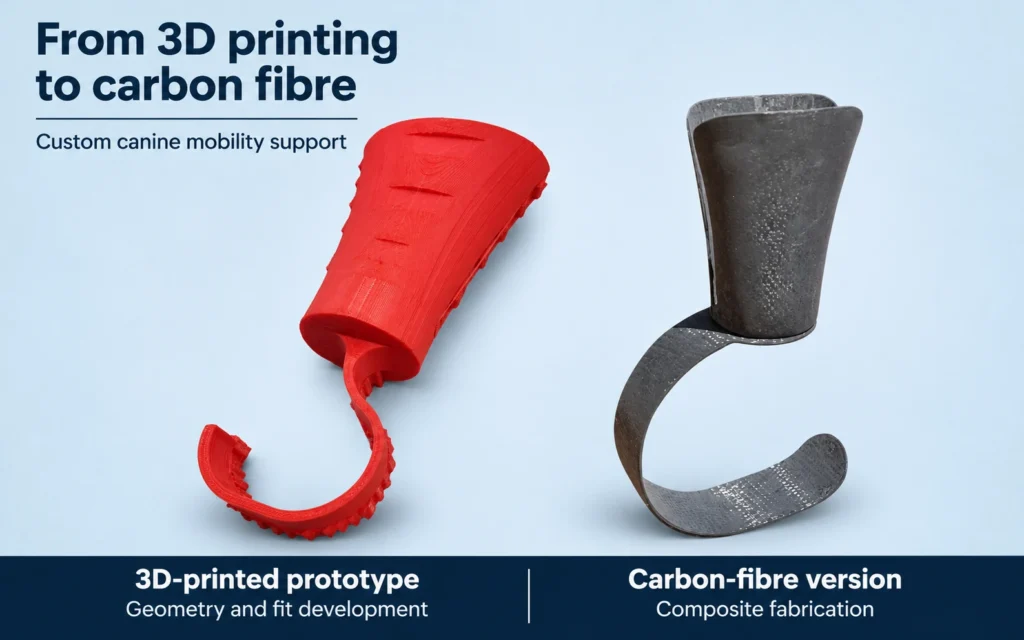
From 3D printing to carbon fibre: a polymer prototype for geometry and fit development, followed by a composite version made using 3D-printed moulds.
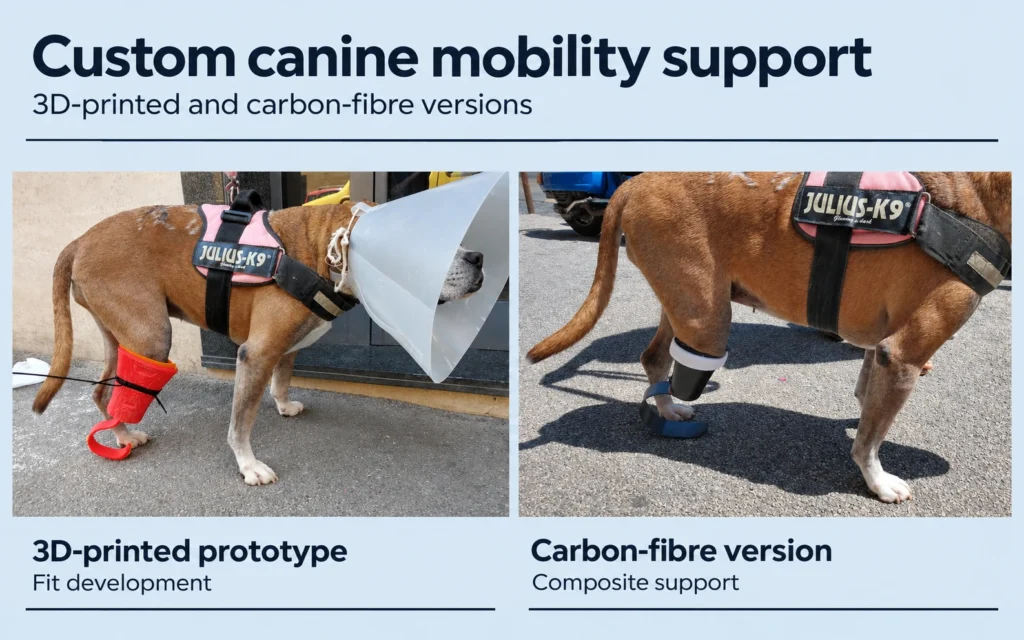
Custom canine mobility support: the 3D-printed prototype during fit development and the carbon-fibre version in use.
3D printing for veterinary applications
Custom canine mobility supports developed through additive manufacturing and carbon-fibre composite fabrication.
The 3D-printed prototype supported geometry and fit development. The carbon-fibre version was produced using 3D-printed moulds and vacuum lay-up.
This project was developed by the founder of Oniro at Officine Detry, bringing together digital design, polymer prototyping and composite manufacturing.
3D printing for aerospace composite cores
Oniro manufactures density-graded thermoplastic foam cores and lightweight components for aerospace structures using Foam Additive Manufacturing® (FAM). We engineer localized stiffness, thickness and bonding surfaces to match your load cases and manufacturing route delivering repeatable, production-oriented parts for functional applications and series supply.
Up to 80% weight reduction
FAM transforms standard thermoplastics into ultra-light foams during printing, reducing mass while keeping geometry and function integrated.
Porosity gradient control (voxel-by-voxel)
Density and stiffness can be tuned voxel-by-voxel (0.2–0.9 g/cm³), enabling structural and buoyant zones in the same continuous print.
Compatible with certified aerospace polymers
Supports aerospace thermoplastics such as PEEK/PAEK (PEEK, PEKK, LM-PAEK), PEI (ULTEM™), PPS and sulfone polymers (PPSU/PSU/PES).
Designed for repeatability and qualification paths
Controlled parameters, defined density windows, and documentation packages to support your validation/qualification workflow.
Aerospace additive manufacturing
Oniro designs and 3D prints aerospace components in high-performance thermoplastics. Our work spans compact PEEK AM200 connector brackets and density-graded foam cores produced with Foam Additive Manufacturing® (FAM).
PEEK brackets and connector components
Sandwich cores and interior components
UAV fairings, equipment housings and ducts
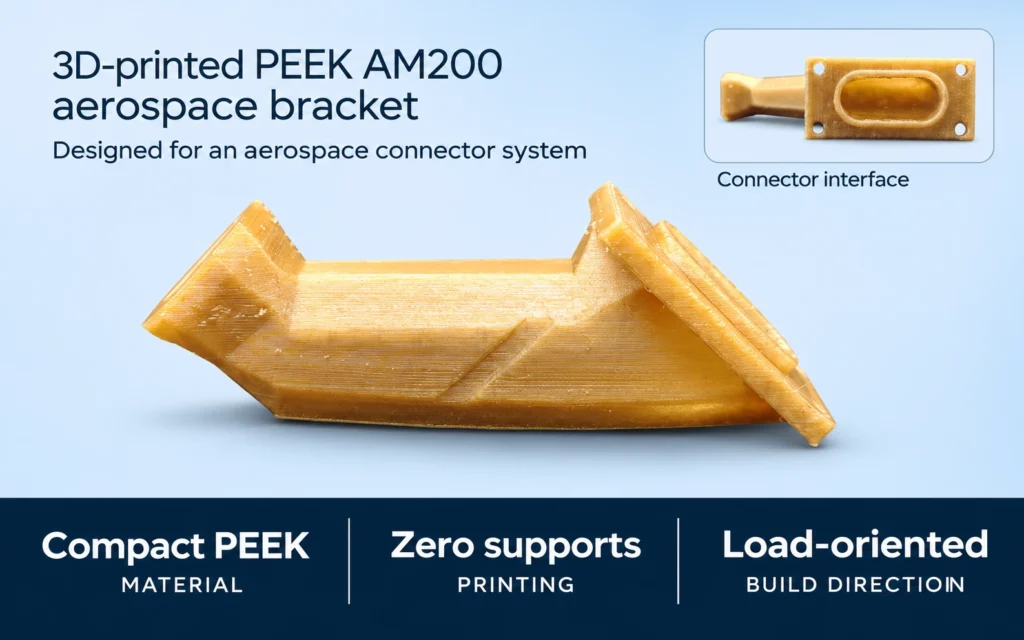
PEEK AM200 aerospace bracket for a connector system, designed for support-free 3D printing with build orientation selected for the expected loads. Printed in compact PEEK.
3D printing for architecture and design
Oniro combines large-scale additive manufacturing with Foam Additive Manufacturing® (FAM) to create lightweight furniture and architectural components in thermoplastics. Controlled foam density reduces material use, while custom geometries support interior design and made-to-order production.
Weight reduction to simplify installation
Lightweight components reduce handling effort and can lower structural load requirements (application-dependent).
Functional porosity: acoustic and thermal performance by design
Porosity and density are engineered to target sound absorption damping and thermal insulation, while maintaining stiffness where needed.
Custom geometry without tooling
Net-shape printing enables freeform surfaces, variable thickness, ribs, and integrated mounting features without molds.
Recyclable thermoplastic
Thermoplastic solutions support circular strategies and simplified end-of-life management (project-dependent).
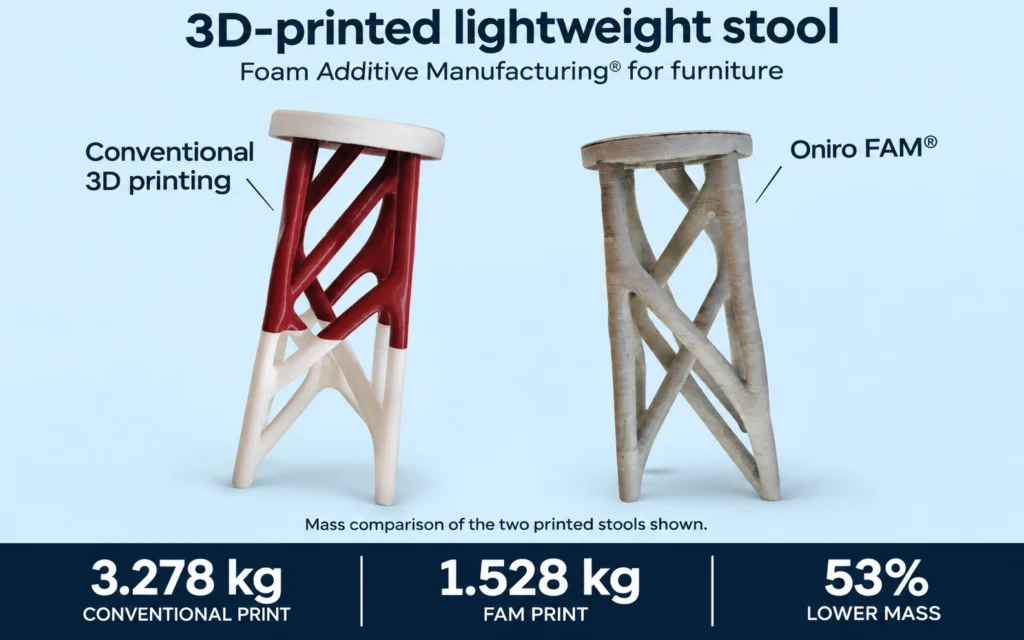
FAM 3D-printed stool: 1.528 kg versus 3.278 kg for the conventional print shown, approximately 53% lower mass.
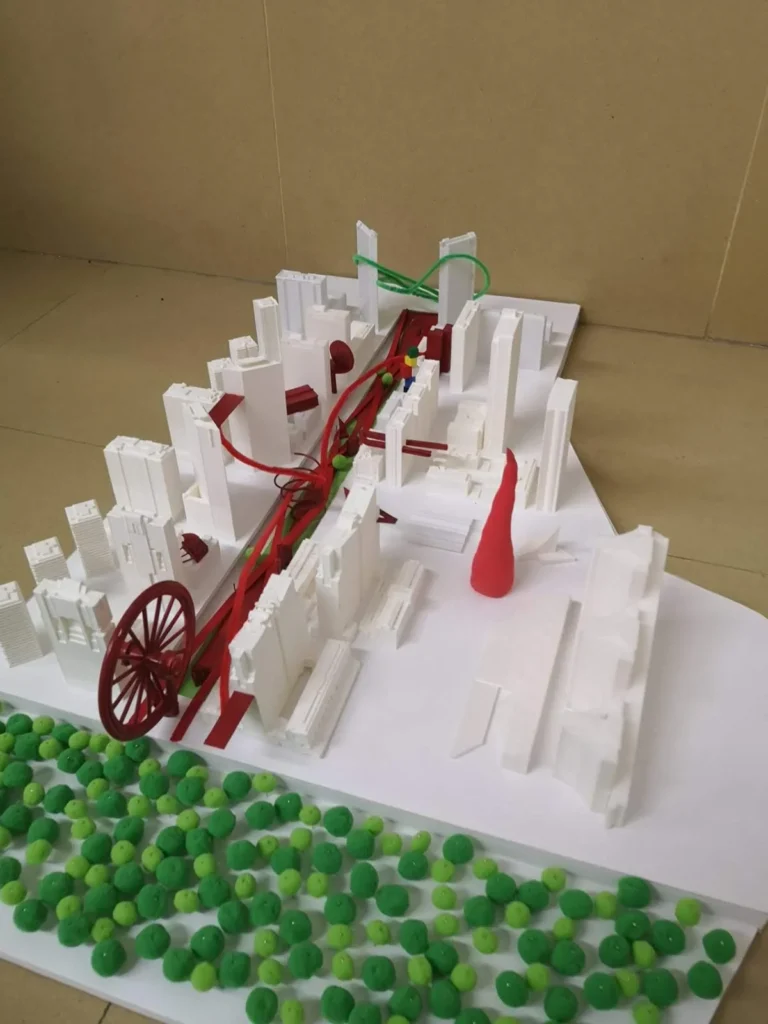
Assembled urban scale model with printed buildings and coloured spatial elements. From the founder’s earlier portfolio at Officine Detry.
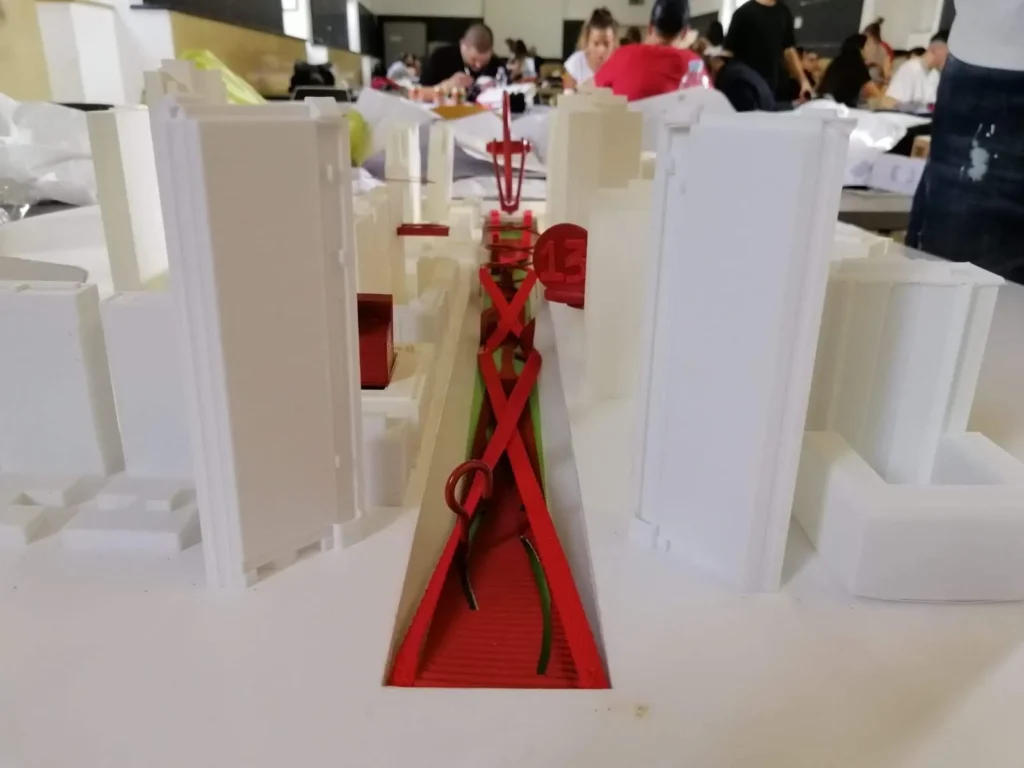
Detail of the architectural model: a red connecting structure within the surrounding building volumes. From the founder’s earlier portfolio at Officine Detry.
3D-printed furniture and architectural models
Our FAM 3D-printed stool weighs 1.528 kg, compared with 3.278 kg for the conventional 3D-printed version: approximately 53% lower mass for this demonstrator.
Applications for architecture and interiors include:
Custom furniture, stools and furniture cores
Lightweight partitions and wall elements
Acoustic panels and bespoke components
3D-printed impact protection components
Oniro manufactures impact-absorbing thermoplastic components with engineered, density-graded porosity using Foam Additive Manufacturing® (FAM). We design the internal architecture to meet target energy absorption, thickness, weight, and fit constraints delivering repeatable parts for pre-series and production supply.
Higher energy absorption
Density-graded structures can deliver up to +47% energy absorption while keeping weight and thickness under control.
Porosity gradient control (voxel-by-voxel)
Density and stiffness can be tuned voxel-by-voxel (0.2–0.9 g/cm³), enabling structural and buoyant zones in the same continuous print.
Single-material, recyclable architecture
Monomaterial parts reduce assembly complexity (no mixed foams/cores), supporting simpler end-of-life management.
Repeatability for pre-series and production
Controlled process parameters and defined density windows support consistent mechanical response across batches.
Custom impact-absorbing parts
Production-ready protective components and inserts, including:
Helmet liners
Body protection pads
Sports protective inserts
Footwear insoles & damping inserts
Heritage & Museums: tactile replicas and talking statues
Oniro combines 3D scanning, 3D printing and interactive storytelling to make cultural heritage accessible through touch and sound.
We create tactile statue replicas for blind and partially sighted visitors and talking statues that tell their own story when a visitor approaches or touches them. From digital capture to finished exhibits, we support museums, cultural institutions and inclusive exhibitions.
High-accuracy digital capture
3D scanning with sub-millimetric accuracy (project-dependent) to preserve geometry and fine details.
1:1 replicas with high geometric fidelity
Full-scale printing optimized for stability, handling, and display—suitable for tactile interaction and public-facing use.
Exhibit-ready finishing
Post-processing and hand finishing to achieve the required surface quality, color matching, and touch-safe textures.
Accessible experiences at scale
Replicas designed for tactile tours, inclusive education, and multi-site installations while protecting originals.
Structured delivery for institutions
Clear deliverables, documentation, and project coordination aligned to institutional requirements and timelines.
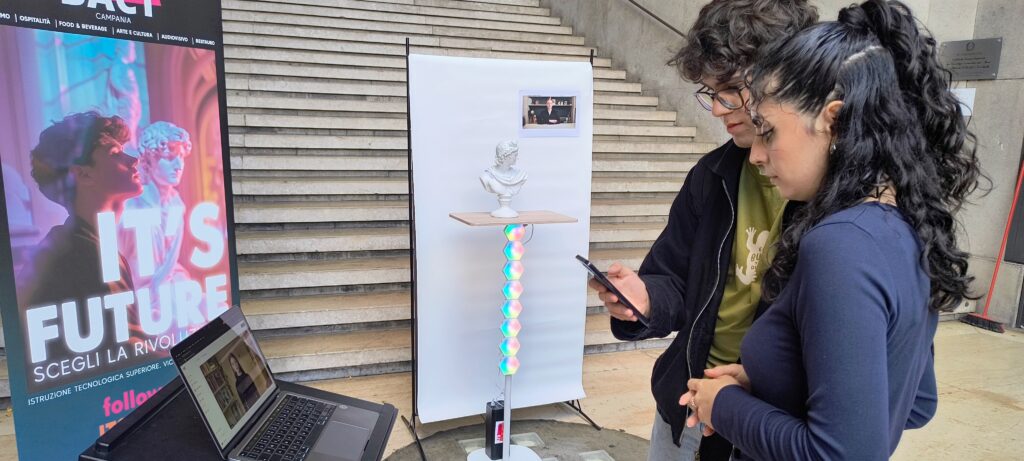
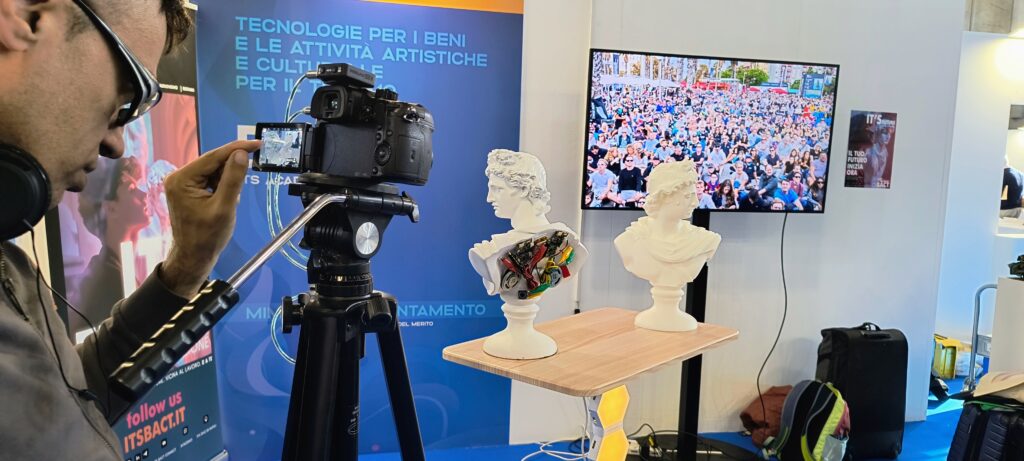
An encounter with interactive heritage: a sculptural bust presented on an illuminated exhibition stand.
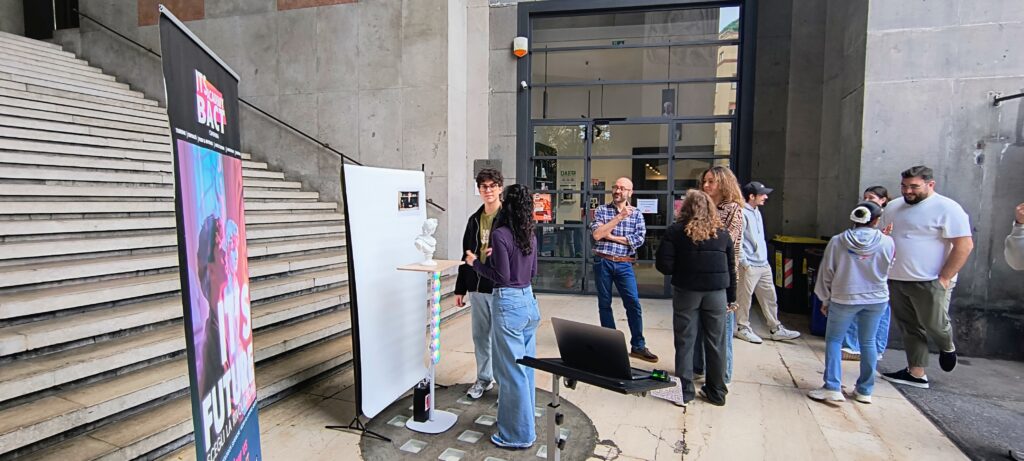
Presenting the museum installation to visitors: sculpture, interpretation and exhibition design.
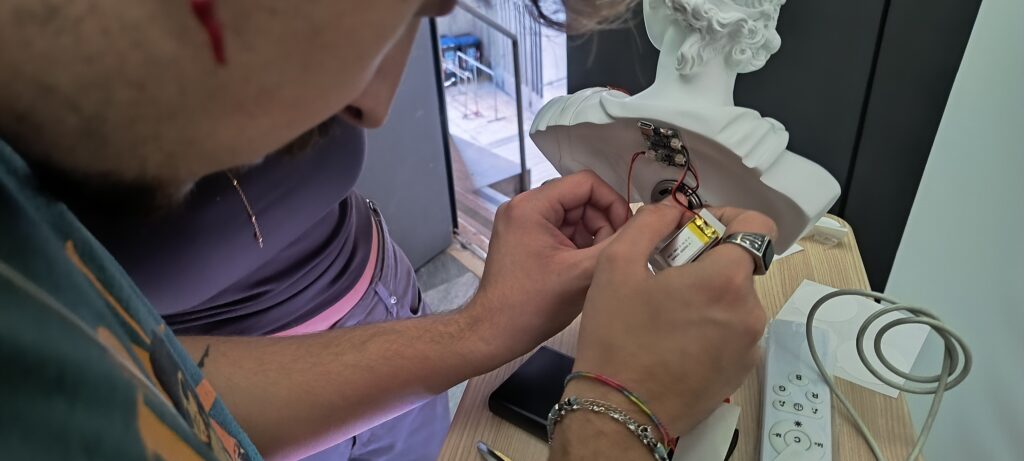
Inside the talking statue: integrating electronic components into the sculptural bust for the interactive installation.
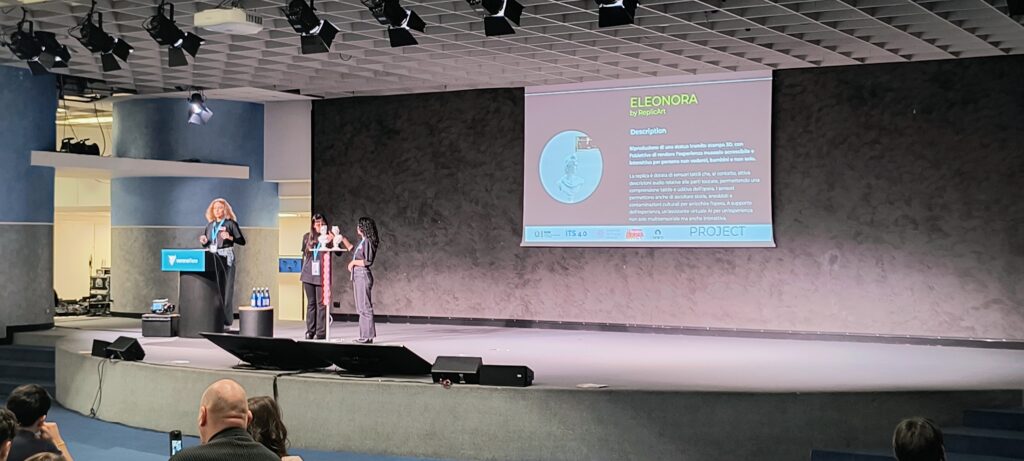
Sharing the cultural heritage project through a public presentation.
Documenting the heritage installation and its sculptural replicas.
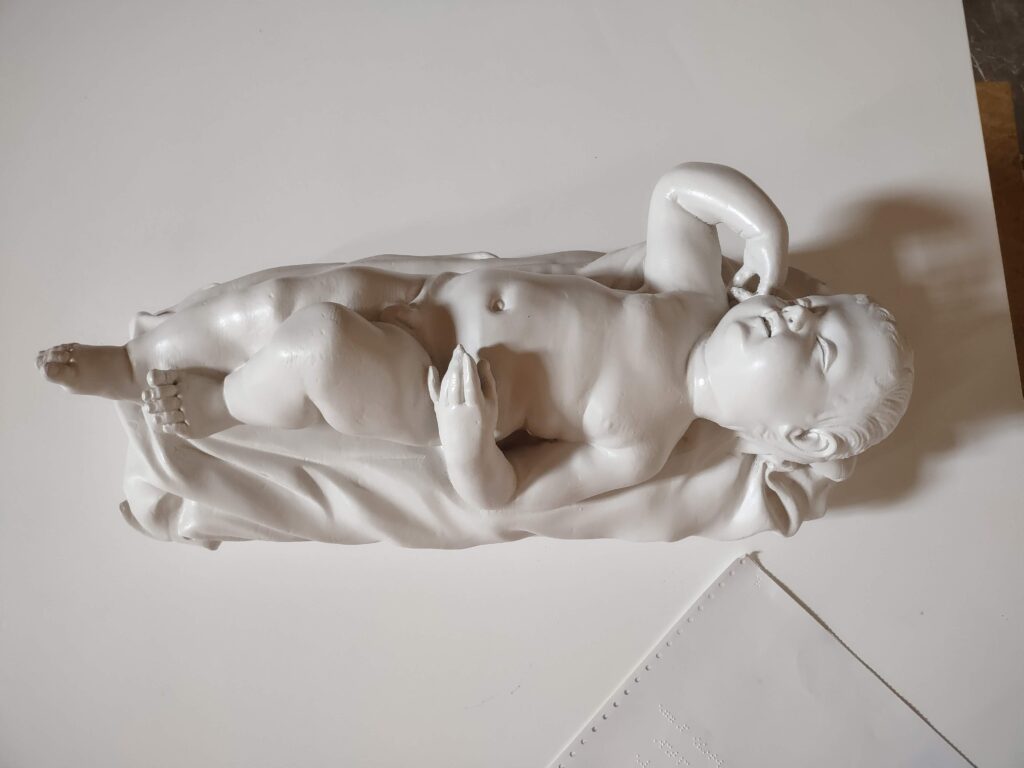
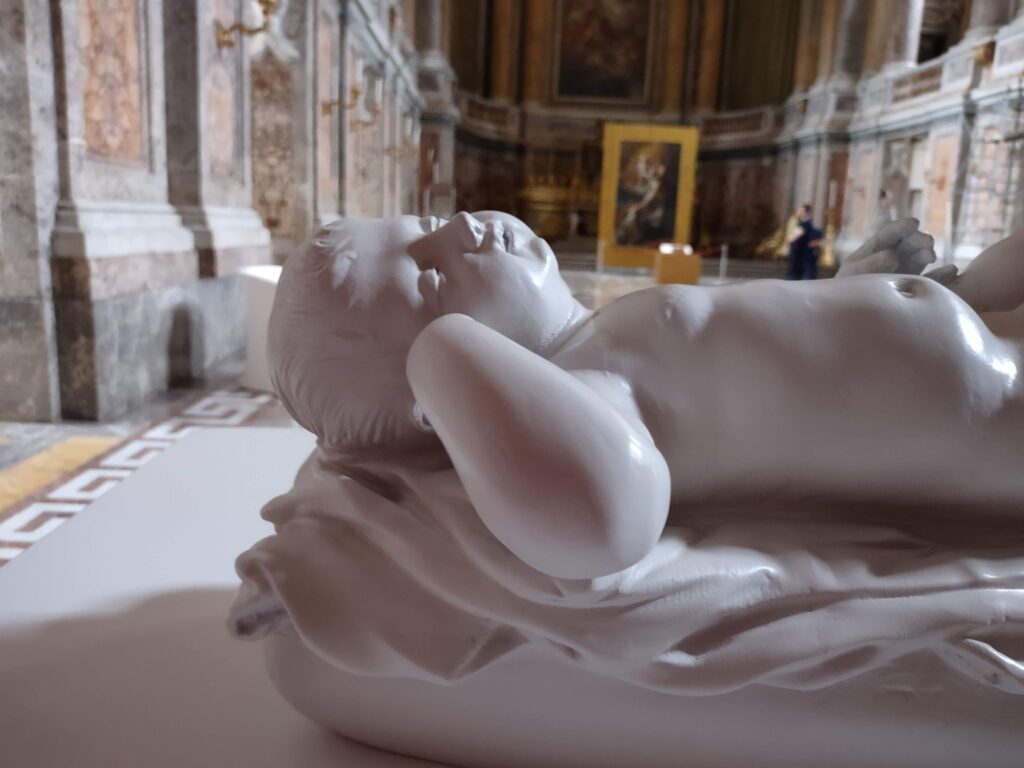
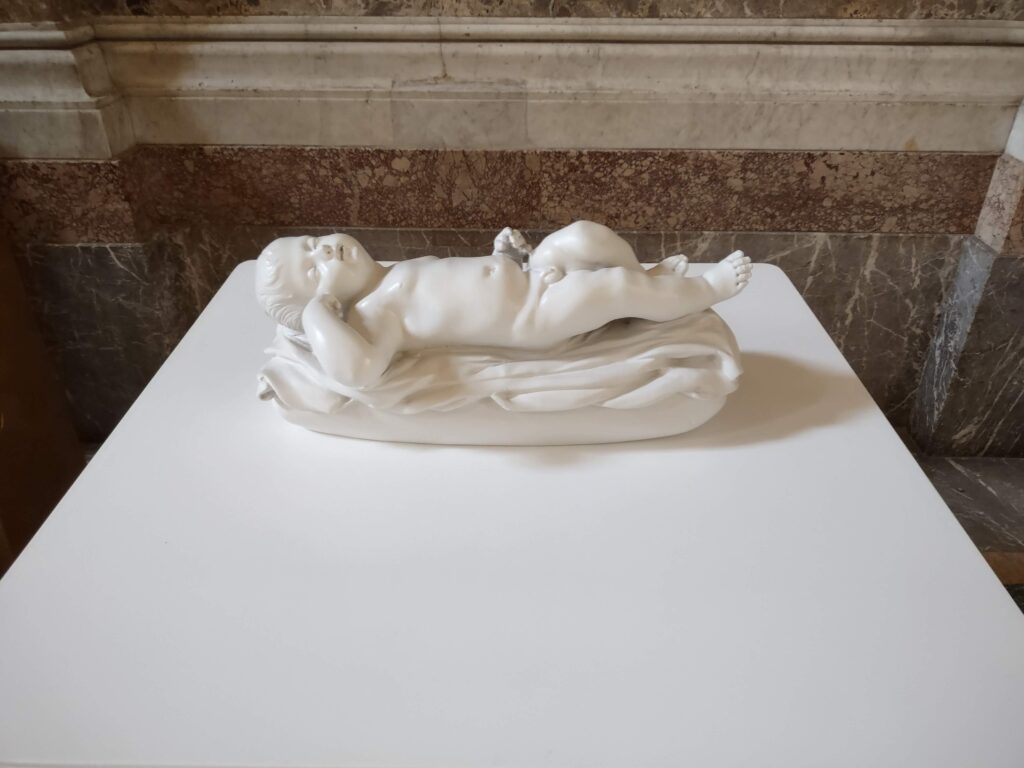
A reclining sculpture reproduced in white: an overview of its form and proportions.
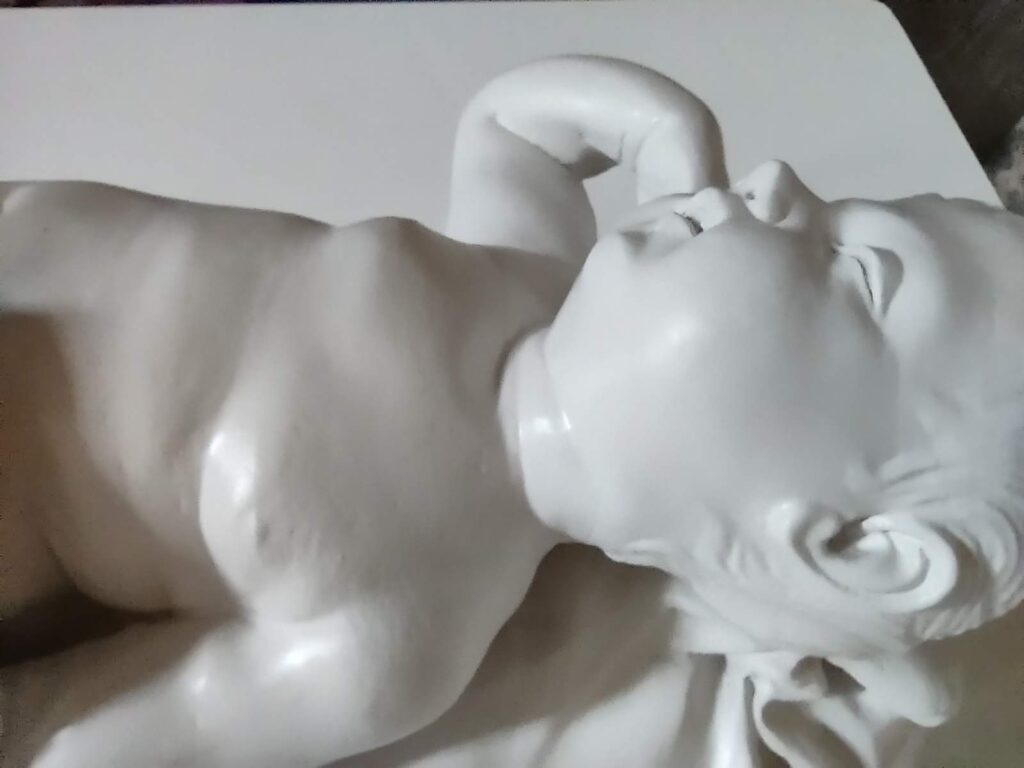
Close-up of the replica: facial features and surface details.
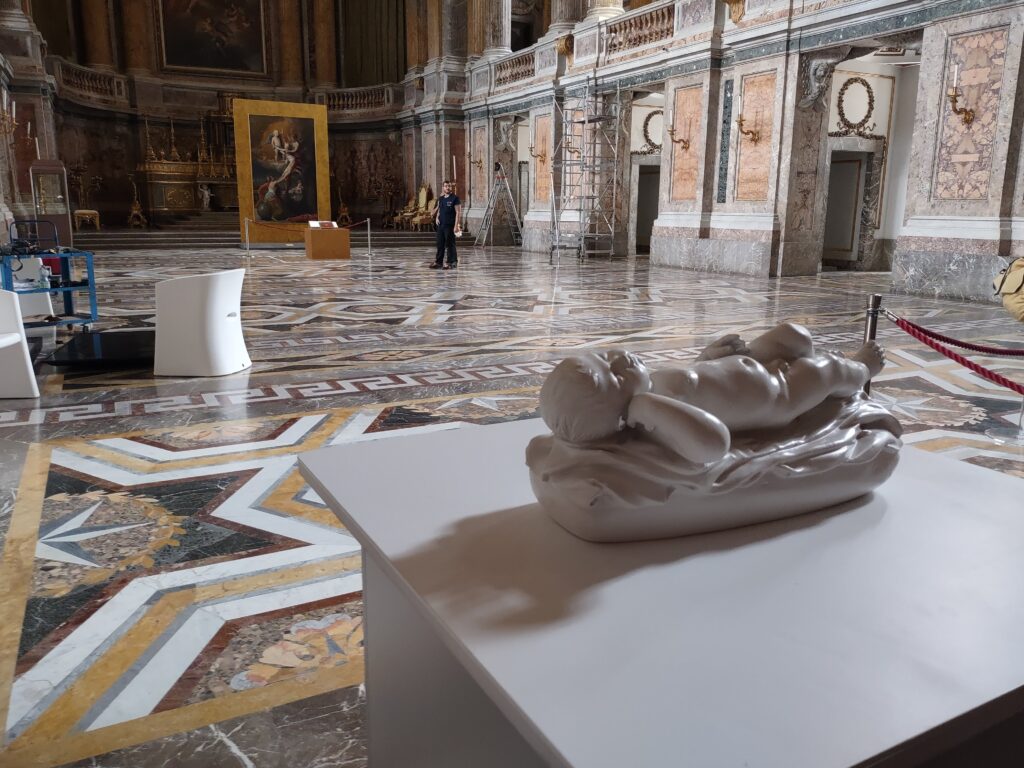
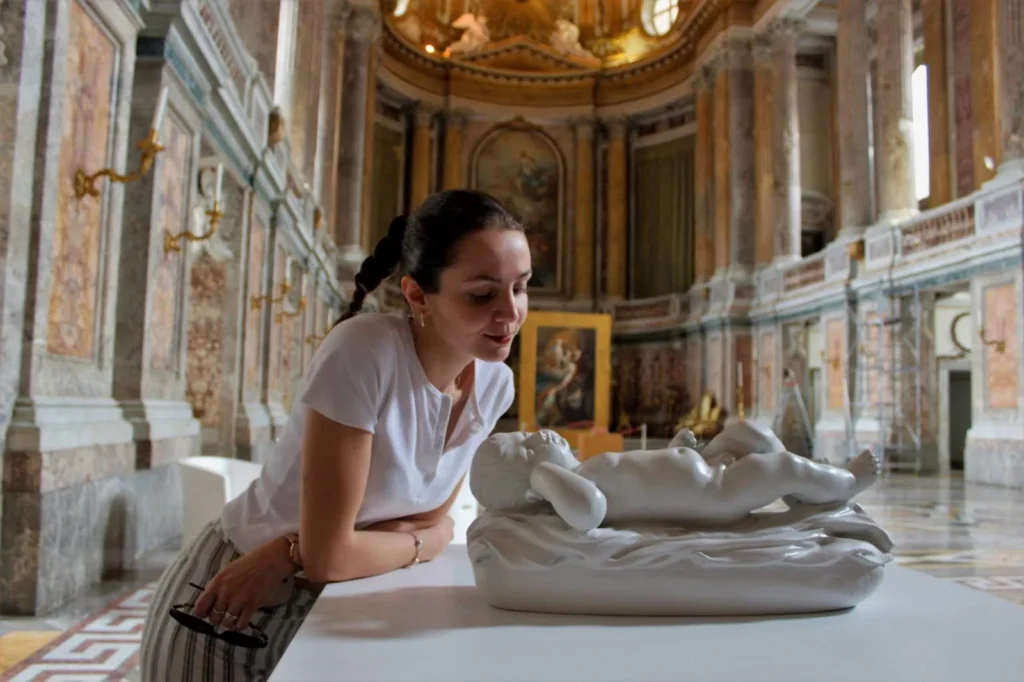
A sculpture replica displayed in a cultural setting, bringing the reproduced form into the exhibition.
A closer view of the replica’s head and drapery.
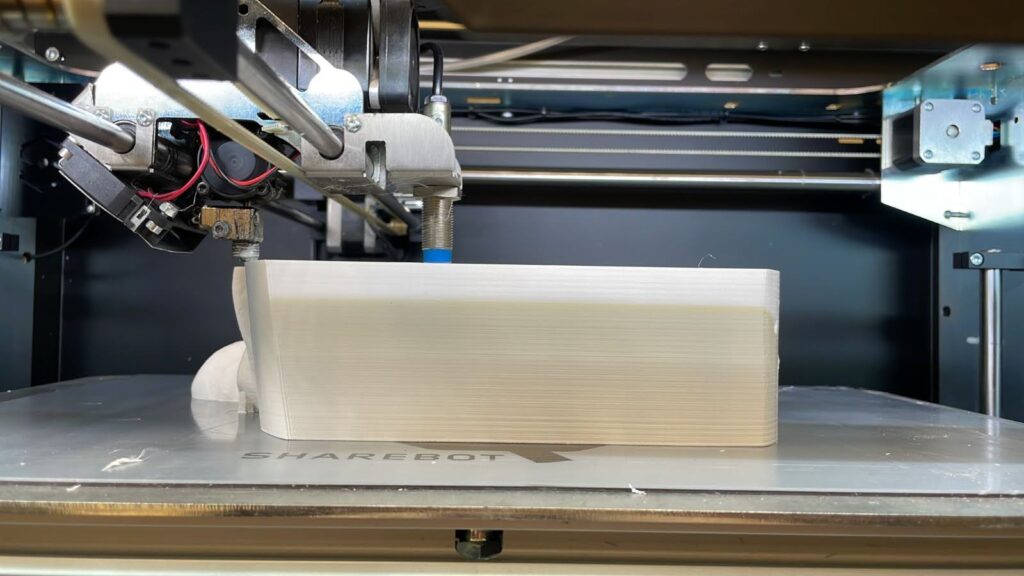
Additive manufacturing in progress: turning digital geometry into a physical component.
The finished sculpture replica on its display plinth.
Carlo Tito replica, Piccolo Principe exhibition, Royal Palace of Caserta, 2022. Digital survey: Facto 3D; 3D printing: CeSMA, Università Federico II.
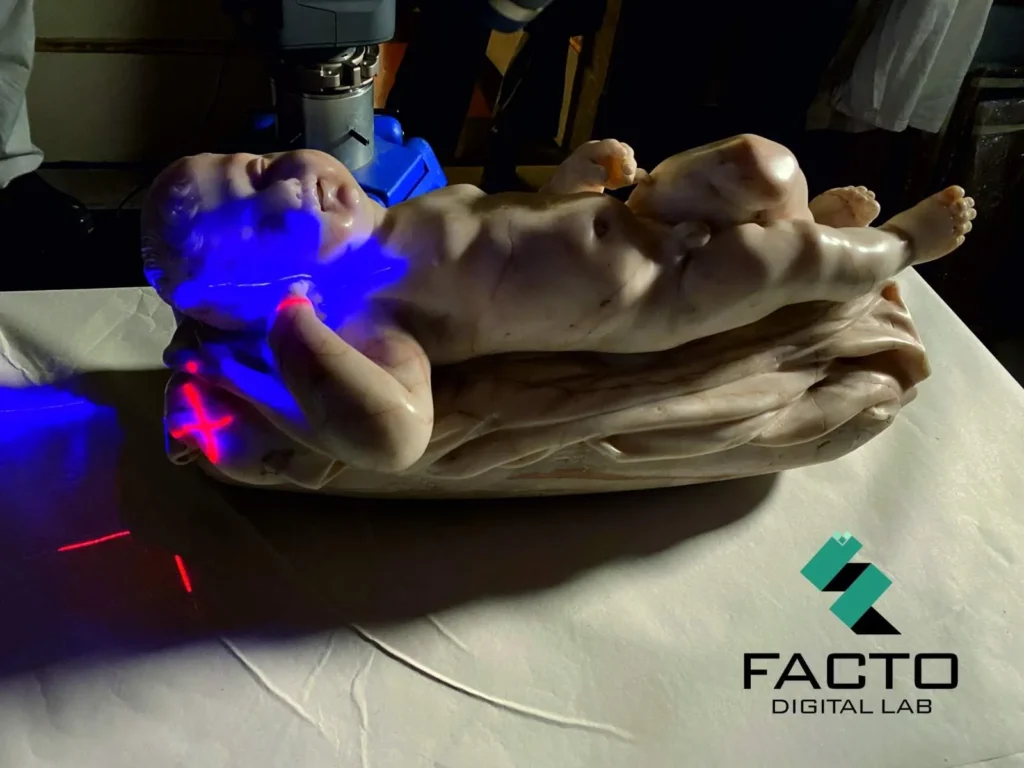
Digital capture of the original Carlo Tito sculpture. Survey credited to Facto 3D in the exhibition catalogue.
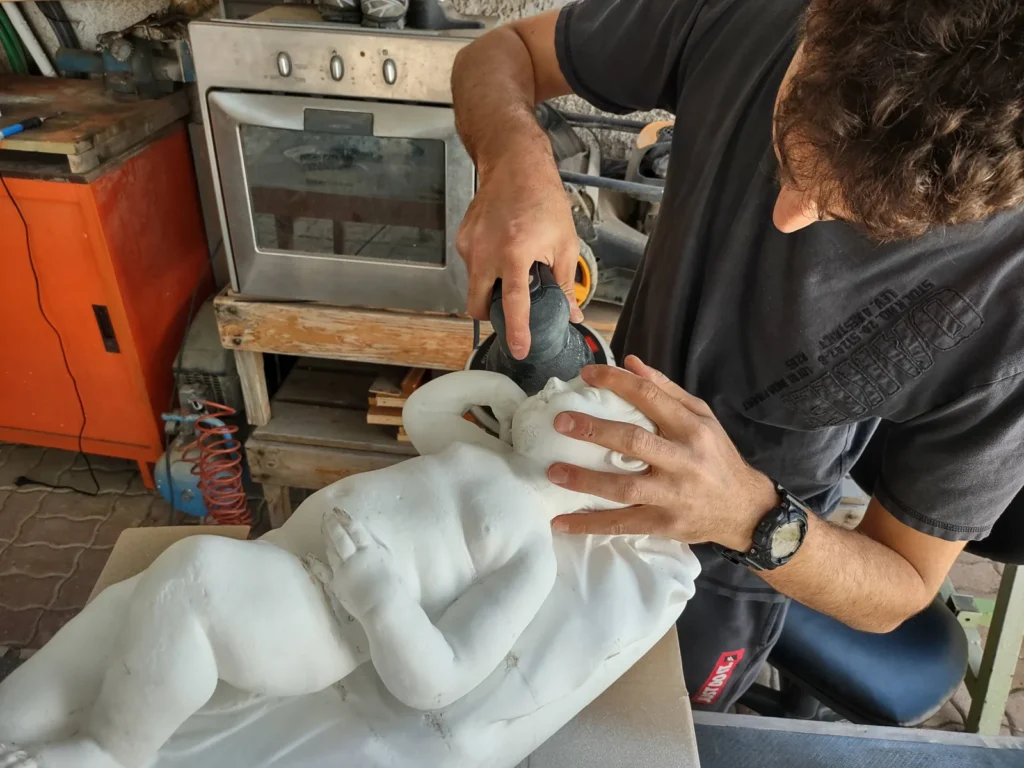
Manual finishing of the printed Carlo Tito replica before its presentation in the museum.
Experience art through touch and sound
Tactile statues for blind and partially sighted visitors
A tactile replica brings sculpture within reach. Visitors explore its shape, proportions and surface details with their hands, building an understanding of the artwork through touch. A dedicated replica makes this encounter possible while keeping the original separate from handling.
Talking statues: the artwork tells its own story
Approach the statue or touch it, and its audio narration begins. The sculpture introduces itself and tells visitors about its identity, history and details. Proximity-triggered or touch-activated storytelling turns a museum visit into a direct encounter with the artwork.
Touch and spoken interpretation can work together: visitors discover the form with their hands while listening to the story behind it. The activation method and narrative are defined for each installation.
From 3D scan to museum installation
Oniro supports 3D scanning and digital model preparation, full-scale (1:1) or scaled replicas, 3D printing, post-processing, finishing and mounting solutions for museums and cultural heritage projects.
This project was made possible thanks to the funding received under the “Campania Startup 2023” call for proposals, promoted by the Regional Department for Research, Innovation, and Startups (UOD05 – Regione Campania), as part of the Regional Operational Programme FESR 2014–2020 – Specific Objective 1.1 – Action 1.1.3. This strategic support enabled us to formalize Oniro S.r.l. and initiate the industrial development of our core technology: Foam Additive Manufacturing (FAM), an advanced 3D printing process capable of controlling the internal morphology and density of thermoplastic materials through real-time physical foaming.
The project presented under the Campania Startup 2023 program aimed to demonstrate the potential of mono-material structural components manufactured in a single step, without adhesives or post-processing, offering high mechanical performance and full recyclability. Applications range from lightweight sandwich panels for transportation and aerospace to bio-based foamed parts for sustainable consumer products. Thanks to this grant, we were able to invest in early-stage prototyping, intellectual property protection, and validation of our approach—laying the foundation for what is now an operating startup with international ambitions and solid technical credibility.
Progetto realizzato con il sostegno finanziario – PR Lazio FESR 2021-2027 – Obiettivo Specifico 1.3. – Open Call ESA BIC Lazio – CUP F87H25001650008